
Opening Summary
New research shows LinkedIn® is now one of the most cited sources used by AI systems when generating answers about leadership, careers and business. This shift has important implications for how professional authority and visibility are developing in the AI era.
Full Article
A Quiet Shift in Professional Authority
Most leaders still assume LinkedIn decides who appears authoritative on the platform.
That assumption made sense for years. Visibility on LinkedIn was largely shaped by the platform’s algorithms, engagement signals and network dynamics.
But something important is changing.
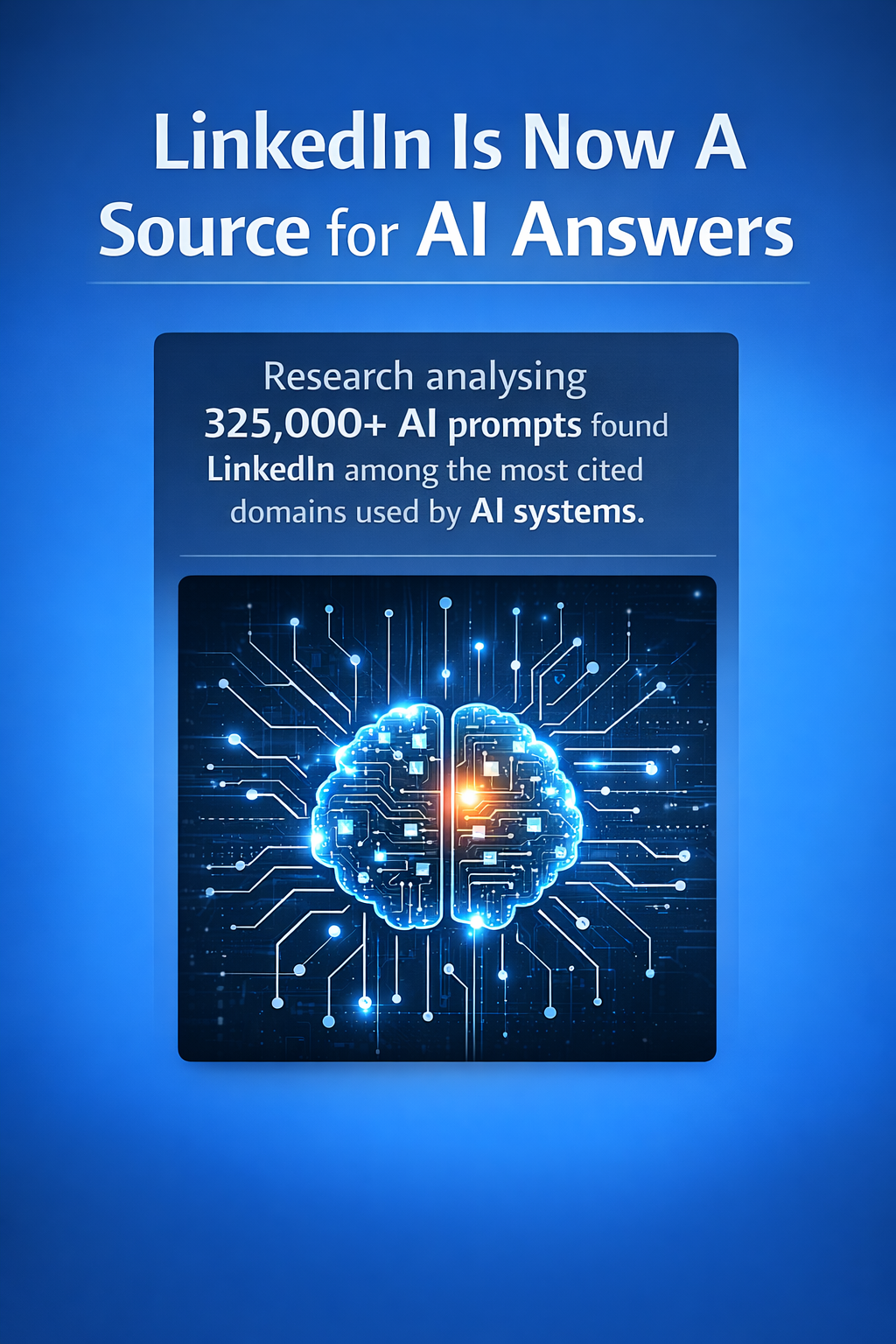
A new report highlighted by Social Media Today reveals that LinkedIn is now one of the most cited sources used by AI systems when generating answers about leadership, careers and business.
This suggests LinkedIn is no longer simply a professional networking platform. It is increasingly becoming part of the knowledge layer that AI systems draw from when explaining the world of work.
And that changes the role professional presence plays online.
What the Research Found
The research analysed hundreds of thousands of prompts across major AI tools such as ChatGPT, Perplexity and Google’s AI-powered search responses.
Researchers examined which domains were most frequently referenced when these systems generated answers about professional topics.
LinkedIn ranked among the most cited sources.
This matters because AI tools are rapidly becoming a starting point for professional research. Many people now ask AI questions about leadership, career development or business strategy before consulting traditional search results.
When AI systems construct answers, they rely on publicly available information across the web. Increasingly, that information includes content from LinkedIn.
Where AI Finds Expertise on LinkedIn
AI systems are not pulling LinkedIn information randomly. The research suggests they tend to draw from content that clearly signals professional expertise or explains ideas in structured ways.
Common sources include:
- LinkedIn articles explaining concepts and frameworks
- Professional profiles that signal expertise and industry experience
- Company pages describing organisations and sectors
- Posts where professionals explain ideas rather than simply react to news
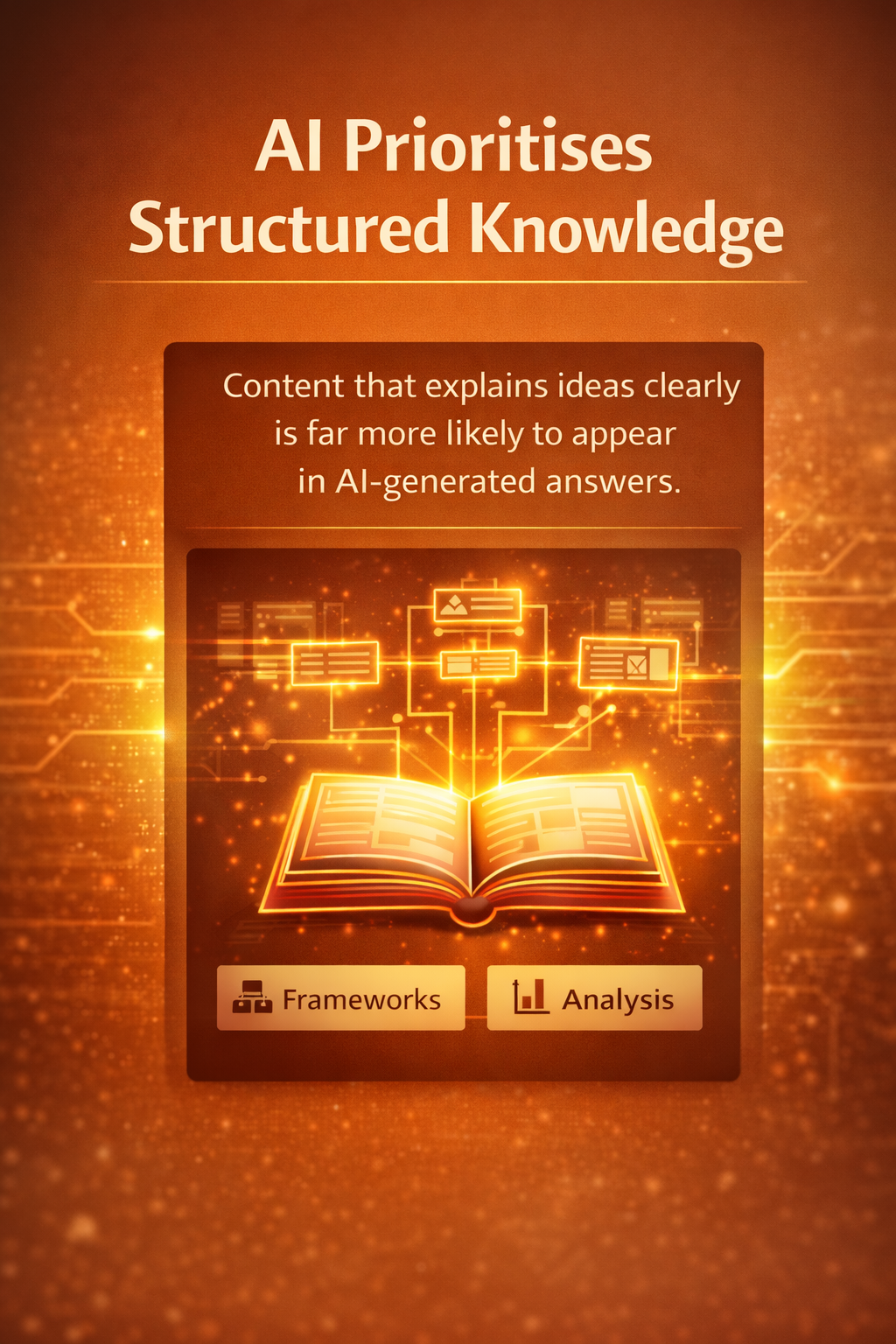
Across the analysis, one pattern appears consistently. Content that clearly explains ideas is far more likely to appear in AI-generated answers than short conversational commentary.
- Posts create conversation.
- Articles create knowledge.
- AI systems rely heavily on knowledge.
How AI Decides Who Appears Authoritative on LinkedIn
AI systems do not judge authority in the same way humans do.
They rely on signals that indicate expertise and credibility across the web.
When analysing professional content, AI systems typically look for patterns such as:
- Clear explanations of ideas or frameworks
- Consistent commentary about a specific industry or topic
- Professional experience signals in profiles and bios
- Structured content such as articles and long-form insights
- References or discussion across multiple professional sources
These signals help AI systems determine whether a source is likely to represent credible expertise.
Content that clearly explains concepts, decisions or professional insights is far easier for AI systems to interpret than short conversational updates. This is why structured knowledge tends to travel further in AI-generated answers.
When professionals articulate their thinking clearly and consistently, they create signals that help AI systems recognise their expertise.
The Shift from Algorithms to Interpretation
For years, authority on LinkedIn was shaped largely by platform mechanics. The algorithm determined what appeared in feeds. Engagement amplified certain voices. Network effects helped some ideas spread further than others.
AI introduces a new layer.
When people ask AI questions about leadership, credibility or professional strategy, those systems now assemble answers by interpreting information from across the internet.
LinkedIn has become one of the sources those systems rely on. Which means authority on LinkedIn is no longer shaped only by platform algorithms. It is increasingly shaped by how AI systems interpret the expertise shared on the platform.
The Emerging Visibility Gap
This shift is creating a widening gap between two types of professionals.
Visible experts explain their thinking publicly. They share insights, frameworks and perspectives drawn from their experience.
Invisible experts may be equally capable but rarely articulate their expertise in public professional spaces.
AI systems can only learn from the first group.
As more people begin using AI tools as a starting point for research, the ideas of visible experts are more likely to shape how industries are explained.
Over time, this difference may influence how professional authority develops online.
Why This Matters for Leaders
For senior leaders and specialists, the implications are significant.
Professional authority is no longer shaped solely by reputation within organisations or private networks.
It is increasingly influenced by how expertise is expressed in public professional spaces.
When leaders explain their thinking about strategy, leadership decisions or industry change, they create insights that AI systems may interpret and reference.
Those insights become part of the wider professional knowledge ecosystem.
Leaders who remain silent may still possess deep expertise. But without visible signals of that expertise, AI systems have little information to draw from.
The Strategic Question
The report highlighted by Social Media Today is not just a technical insight about AI systems.
It signals a broader shift in how professional authority forms in the digital environment.
LinkedIn is increasingly acting as a source of professional knowledge.
AI systems are increasingly interpreting that knowledge.
And together they are shaping how expertise becomes visible.
Which raises an important question for leaders.
If AI increasingly influences which expertise appears authoritative, how visible is your thinking within the systems interpreting professional knowledge?
If AI cannot interpret your expertise, it cannot surface your authority.
Key Insights from This Article
- LinkedIn is now one of the most cited sources used by AI systems generating answers about professional topics
- AI tools increasingly draw from LinkedIn articles, profiles and expertise commentary
- Content that clearly explains ideas is more likely to appear in AI-generated answers
- Professionals who articulate their expertise publicly may influence how AI explains their industries
- Leaders without visible signals of expertise risk becoming less discoverable in AI-driven environments
Frequently Asked Questions
Why is LinkedIn appearing in AI answers?
AI systems rely on publicly available professional knowledge when generating responses about leadership, careers and business. LinkedIn contains a large volume of practitioner expertise, making it a valuable source.
What type of LinkedIn content appears in AI answers?
Long-form explanations, professional insights, articles and structured expertise are more likely to appear in AI-generated answers than short commentary.
Why does professional presence matter in the AI era?
AI systems can only interpret expertise that is visible online. Professionals who clearly explain their insights and experience create knowledge that AI systems can recognise and reference.
Call to Action
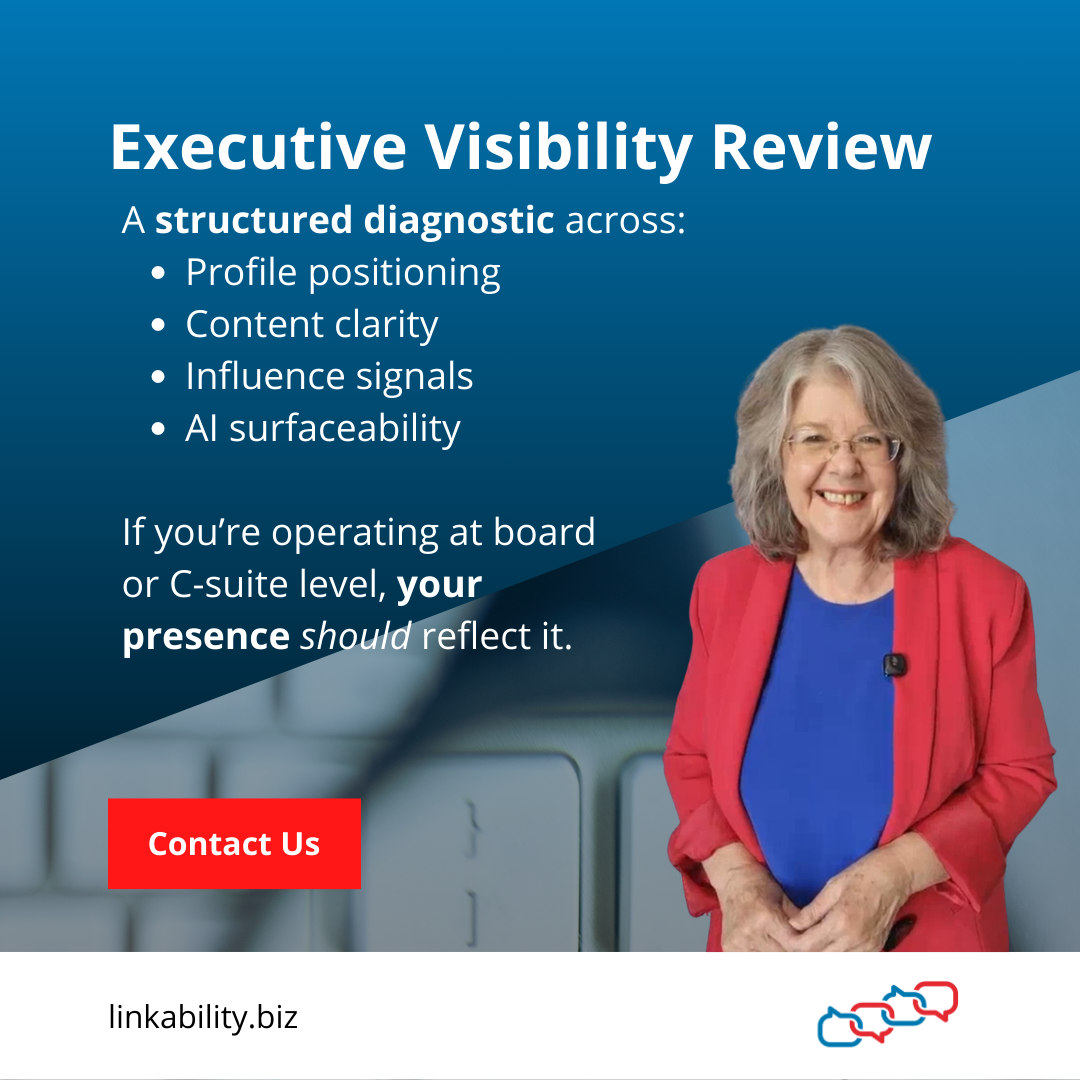
The Link∙Ability Executive Visibility Review
Professional authority in the AI era is shaped not only by reputation, but by how expertise appears across the digital knowledge ecosystem.
The Link∙Ability Executive Visibility Review explores how your expertise appears across LinkedIn and the wider web, and whether the signals are strong enough for people and AI systems to recognise your authority.
Learn more at linkability.biz/executive-visibility-review