
Leading in a Digital World Where Visibility Is Uneven
In a world increasingly shaped by algorithms, leaders face a new challenge: becoming discoverable in systems that don’t always recognise their voices. Visibility is no longer simply a function of expertise, consistency or contribution. It is filtered through layers of AI, ranking signals and data patterns that influence who is surfaced first, who is recommended and who is quietly deprioritised.
Leadership today requires understanding these dynamics, because the ability to be found has become intertwined with the ability to be heard.
When Traditional Authority Meets Algorithmic Authority
Leaders have traditionally built authority through experience, credibility and contribution. Now a parallel form of authority exists: algorithmic authority. This determines which ideas circulate, whose perspectives are shown and which messages gain momentum.
Algorithmic authority does not operate on intention. Instead, it reflects patterns learned from historical data. If past data overrepresents certain tones, styles or demographics, algorithms may elevate similar patterns in the present. This creates an invisible current that some leaders move with, and others must work harder to push against.
Understanding this shift is essential. Leaders who assume visibility is merit-based risk misunderstanding the forces shaping their influence.
The New Leadership Skill – Interpreting Digital Signals
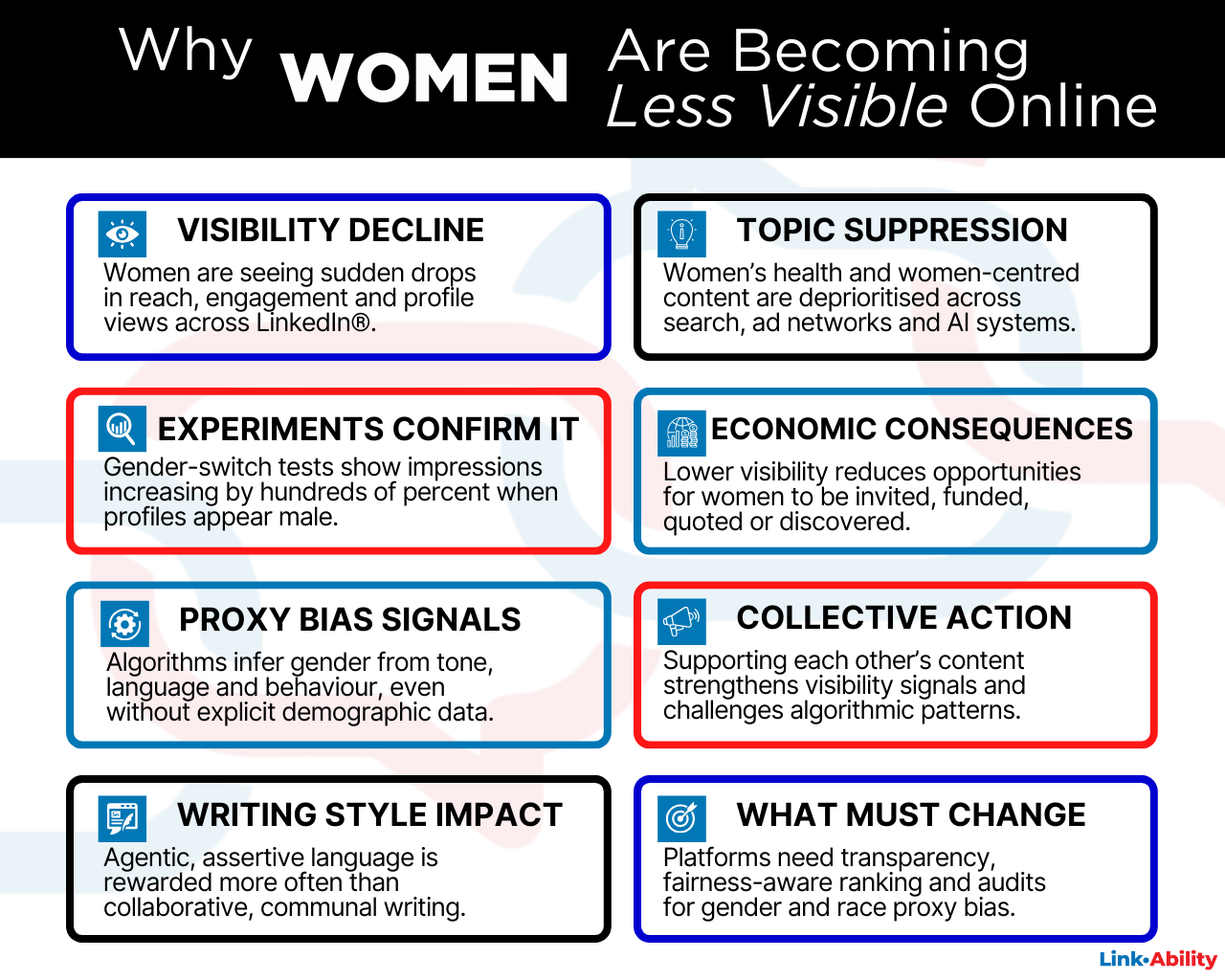
In the digital environment, signals such as writing style, tone, topic choice and posting behaviour can influence how leadership is perceived by machines as well as humans. For example, more assertive, linear communication is often rewarded online, while more relational or collaborative styles may be deprioritised, even when both are equally valid expressions of leadership.
This does not mean leaders should abandon their natural voice. Instead, it raises a new question: how can leaders remain authentic while also ensuring their work is accessible in systems that may not yet recognise every kind of contribution?
Interpreting digital signals is becoming a leadership skill in its own right.
Why Visibility Still Matters for Leadership Growth
Visibility is not vanity. It enables leaders to build trust at scale, signal expertise and create opportunities for dialogue. Reduced visibility limits access to invitations, partnerships, funding pathways and collaborative work. When visibility becomes uneven, so do the opportunities that depend on it.
The leadership landscape is evolving towards environments where discoverability is a strategic advantage. Those who understand how digital systems mediate attention are better positioned to share ideas, influence communities and shape conversations.
When Bias Is Unintentional but Impactful
Uneven visibility is rarely the result of deliberate decision-making. More often, it is the product of proxy signals within AI systems. These signals may interpret tone, topic or linguistic style in ways that align with historical patterns rather than current realities.
For leaders, this means the digital environment may not be neutral terrain. Some voices may be surfaced more often simply because their communication style aligns with past data. Others may appear less frequently, regardless of relevance or value.
Recognising this dynamic is the first step in leading through it.

Navigating an Imperfect Digital Ecosystem
Leaders cannot afford to wait for platforms to correct systemic issues. Instead, they can take proactive steps:
- Communicate clearly and consistently so ideas are easily understood by both people and machines
- Engage with others to strengthen shared visibility and create collective lift
- Support underrepresented voices so digital signals more accurately reflect real-world expertise
- Advocate for greater transparency in how digital systems prioritise content
These actions do more than improve individual visibility – they strengthen the integrity of the leadership ecosystem as a whole.
Leadership for a More Equitable Digital Future
True leadership involves shaping environments, not just operating within them. As AI continues to influence what is seen and what is sidelined, leaders have an opportunity to champion fairness, raise awareness of hidden dynamics and advocate for systems that reflect the diversity and depth of real expertise.
The goal is not simply to be more visible, but to help create a digital environment where visibility is determined by substance, not inherited patterns.
Leaders who understand these forces will be better equipped to influence responsibly, connect meaningfully and ensure that their ideas reach the people who need to hear them.