
Intro
LinkedIn® has quietly updated the architecture behind its feed – and while some of the elements may feel familiar, the direction of travel is now unmistakable.
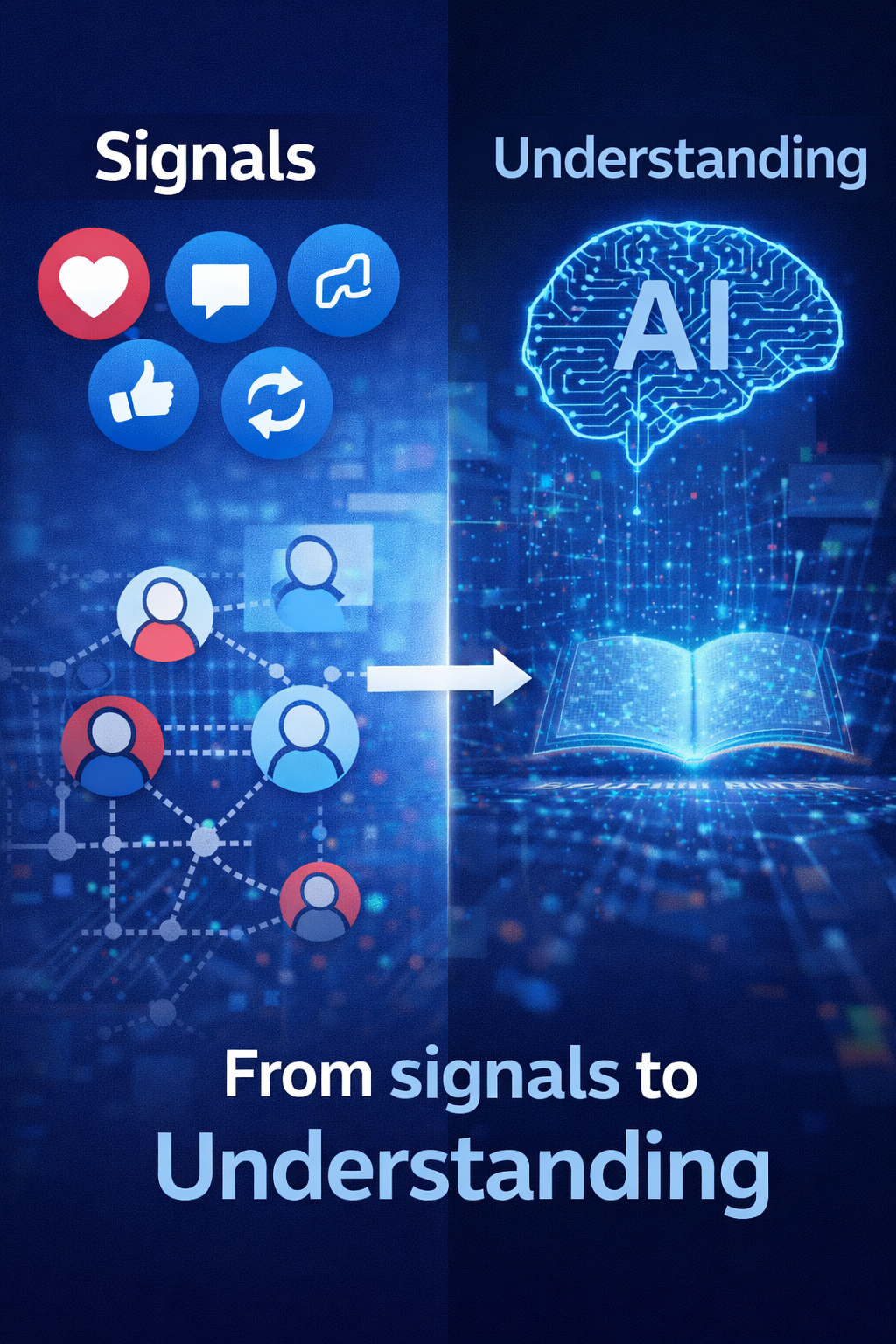
The platform is moving beyond tracking behaviour and towards understanding meaning.
This shift is being driven by the integration of large language models (LLMs) into the feed ranking system, enabling LinkedIn to interpret what content is actually about and how it relates to a member’s evolving professional interests.
It may not look dramatic on the surface. But structurally, it changes how visibility works.
The Shift: From Signals to Understanding
For years, LinkedIn’s feed has relied heavily on observable signals:
- Likes
- Comments
- Shares
- Past engagement patterns
These signals still matter. But they are no longer the full story.
The updated system uses AI to interpret context, connecting ideas across posts even when they use different language. This means the platform is becoming far better at identifying topic relevance, not just interaction patterns.
In practical terms, LinkedIn is starting to understand the difference between a post that is popular and a post that is meaningful.
Semantic Matching: Why Keywords Matter Less
One of the most important changes is the move away from keyword dependency.
Previously, visibility was often tied to whether your content used the same language as your audience. Now, LinkedIn can connect related ideas semantically.
For example, someone engaging with content about leadership may also be shown posts about organisational culture, decision-making, or workplace psychology – even if those exact terms are not used.
This reflects a broader shift across AI systems: understanding concepts, not just words.
A Faster, More Responsive Feed
Another notable change is speed.
LinkedIn has confirmed that relevant posts can now appear in feeds within minutes when they begin gaining traction. The system continuously updates its understanding of both content and user interests.
This has two implications:
- Emerging conversations matter more
- Timing is becoming a viable strategy
Content is no longer competing solely on quality or network size, but also on how closely it aligns with what is happening right now.
Reach Beyond Your Network
The updated algorithm is also designed to surface content beyond your immediate connections.
If the system identifies a strong semantic match between a post and a user’s interests, it may distribute that content more widely, regardless of whether there is a direct connection.
This reinforces a shift many have already observed:
Visibility is no longer constrained by network size alone.
Engagement Still Matters – But Quality Wins
Engagement remains a core signal, but the weighting is changing.
The system is becoming better at distinguishing between meaningful interaction and low-value activity. A smaller number of thoughtful comments can outperform a high volume of generic responses.
This aligns with a broader trend: the algorithm is learning not just that people engage, but how they engage.
The Role of Consistency and Patterns
LinkedIn is also increasingly recognising behavioural patterns over time.
If someone consistently engages with your content, the system is more likely to show them your posts again. Likewise, regular posting and engagement help the platform build a clearer picture of your professional direction.
In effect, the algorithm is learning who you are, what you care about, and where you belong.
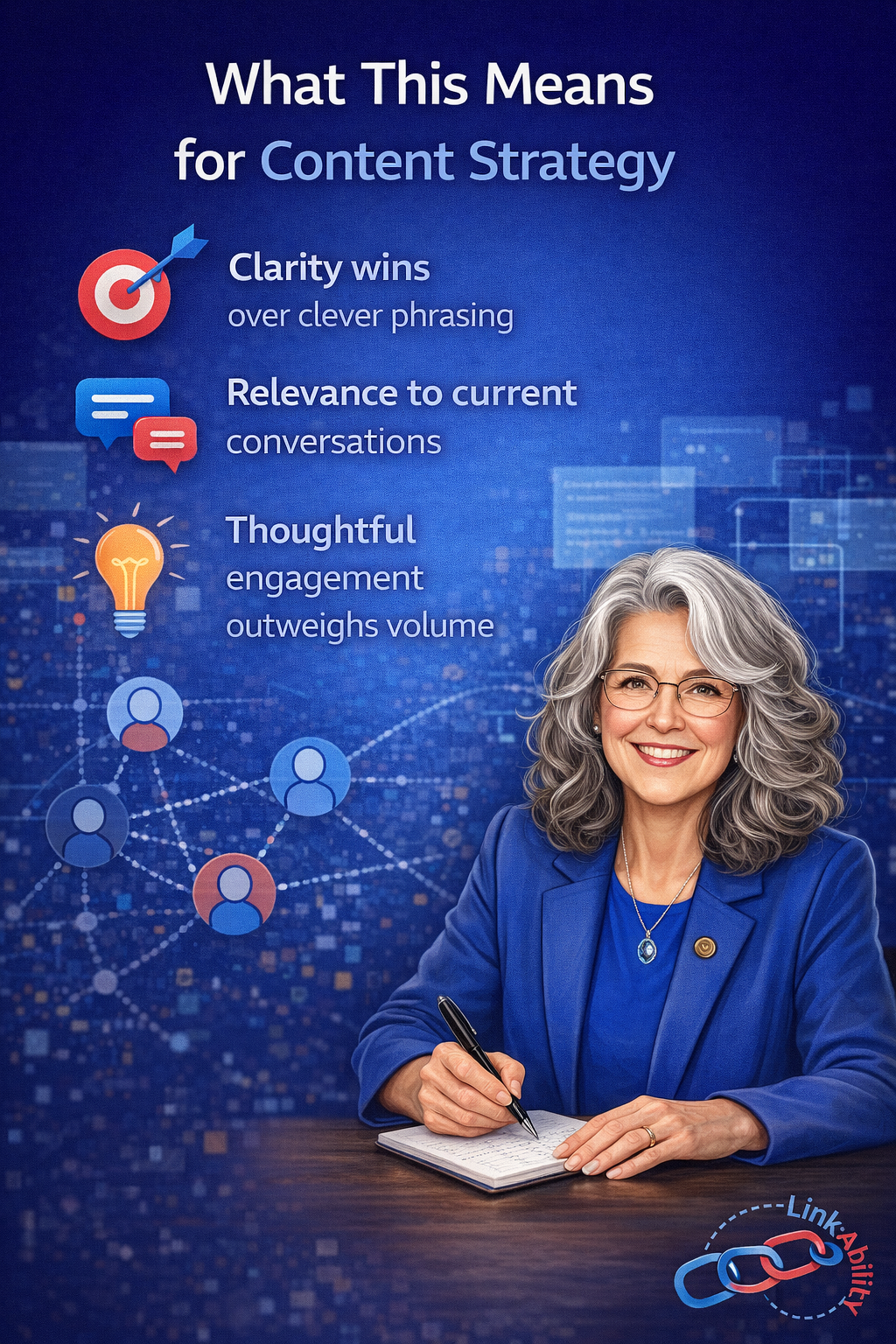
What This Means for Content Strategy
Taken together, these changes point to a clear direction.
LinkedIn is becoming a system that maps:
- Topics
- Interests
- Relationships between ideas
- Patterns of engagement
Rather than simply ranking content based on past performance.
For content creators, this leads to a shift in emphasis:
Clarity of topic becomes more important than clever phrasing
Relevance to current conversations matters more than pre-planned content
Thoughtful engagement carries more weight than volume
A useful way to think about it is this:
The platform is no longer just tracking what you post.
It is understanding what you are known for.
Practical Ways to Respond
If the system is now interpreting meaning, there are some practical adjustments worth making:
- Be explicit about your topic and area of expertise
- Explain your thinking clearly rather than relying on implied meaning
- Engage thoughtfully with posts in your field
- Build on existing conversations rather than posting in isolation
- Stay close to current industry developments
These are not new principles. But they are now being reinforced at a structural level.
Why This Matters Beyond LinkedIn
This shift is not happening in isolation.
Across platforms, AI systems are moving towards semantic understanding – interpreting meaning, context, and relationships between ideas.
LinkedIn’s update reflects that broader change.
It also reinforces something increasingly important:
Content is no longer just written for people.
It is being interpreted, categorised, and connected by AI systems that influence how and where it is seen.
Final Thought
If LinkedIn increasingly understands the ideas behind posts, not just the signals around them, then the question is no longer:
“How do I get engagement?”
It becomes:
“What am I actually known for – and how clearly am I expressing it?”