
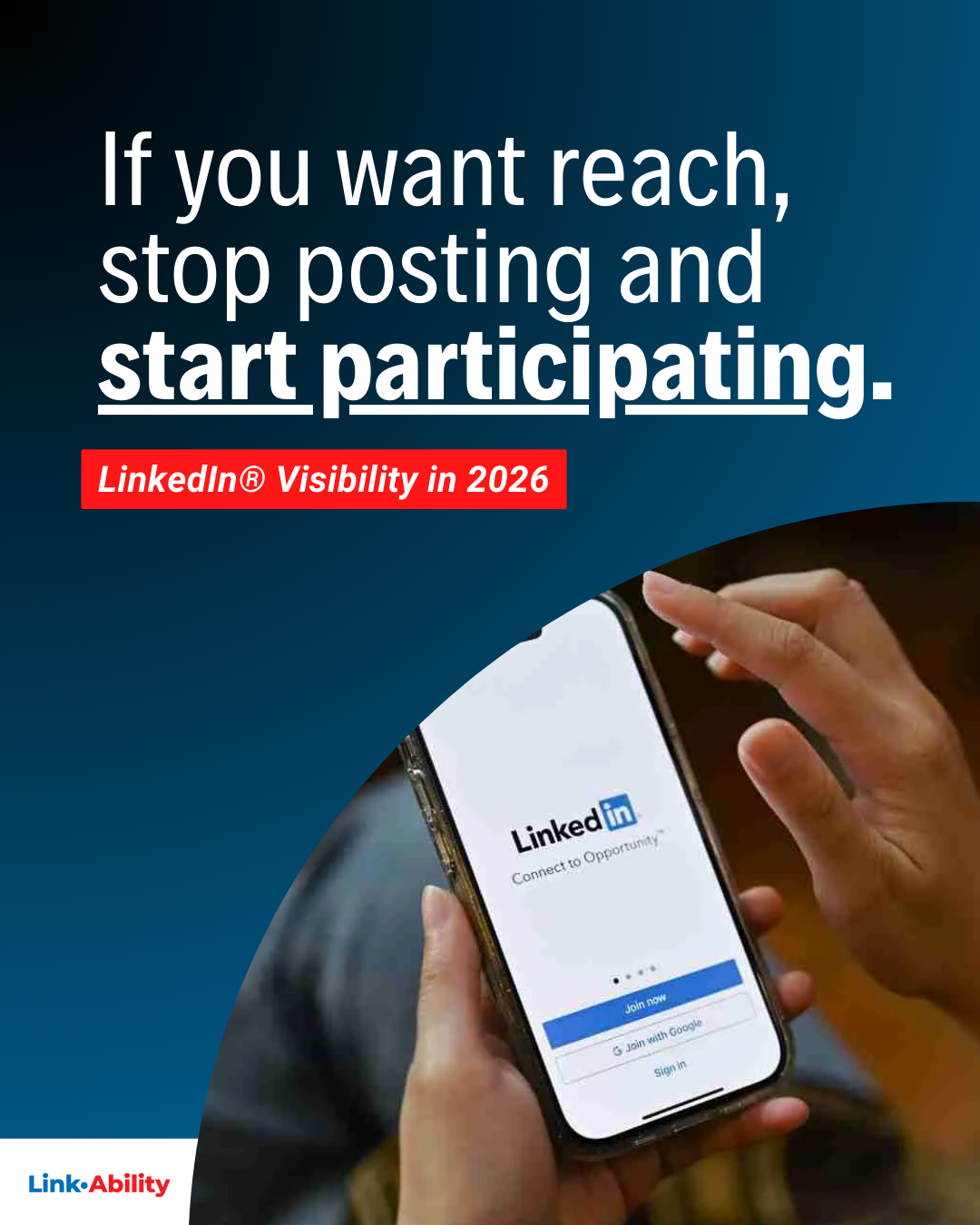
LinkedIn Engagement Has Changed – And Many People Are Feeling It
Recently, I joined Ilise Benun on her long-running Marketing Mentor podcast to talk through a shift that many professionals are experiencing but struggling to articulate. LinkedIn doesn’t feel broken – but it no longer behaves the way it used to. People are posting thoughtfully, sharing valuable insights, and seeing far less engagement than expected. The frustration is real, and for many, it’s deeply demotivating.
The issue isn’t effort or content quality. It’s that LinkedIn engagement now works very differently. Posting is no longer the primary driver of visibility. Engagement – particularly commenting and participation – has taken its place. Understanding this shift is essential for anyone relying on LinkedIn® for credibility, relationships, or business development in 2026.
The Structural Shift Behind LinkedIn Engagement
The biggest change on LinkedIn isn’t aesthetic or tactical – it’s structural.
AI now underpins how visibility works across the platform. Instead of evaluating posts in isolation, LinkedIn looks at activity holistically. Your profile, your comments, your direct messages, your follow-ups, and your consistency all contribute to how visible you are.
This is why so many people feel as though they’re doing everything “right” and still being overlooked. LinkedIn engagement is no longer about broadcasting content. It’s about participating across the platform in a way that signals relevance, credibility, and ongoing presence.
Why Posting Alone No Longer Drives Visibility
For years, the dominant advice was simple: post consistently and visibility would follow.
That advice no longer holds.
Organic reach on posts has declined across the board, and this isn’t a reflection of declining content standards. It’s the result of LinkedIn reweighting its signals. Posts are now just one input among many. Without broader LinkedIn engagement, even high-quality posts struggle to travel beyond a limited audience.
Posting still matters – but it no longer works as a standalone strategy.
What LinkedIn Engagement Really Means Now
Engagement is often misunderstood. It’s not about likes, emojis, or generic responses.
Effective LinkedIn engagement includes:
- Adding informed opinions to conversations
- Asking thoughtful, relevant questions
- Sharing lived experience
- Contributing perspective rather than promotion
One of the clearest signals of this shift is LinkedIn’s introduction of comment view counts. Many users now see their comments receiving more views than their original posts. This alone should prompt a reassessment of where time and effort are invested.
Comments also live permanently on your profile. When someone clicks on your name – perhaps considering working with you – your engagement history becomes part of your credibility story.
Why Commenting Feels Difficult (And How to Lower the Barrier)
Not everyone finds commenting easy. This is particularly true for people who worry about saying the wrong thing, those for whom English is a second language, or professionals who feel they “should” have something profound to say.
This is where AI can be genuinely helpful – not as a replacement for thinking, but as a support tool. Drafting prompts, reframing ideas, or helping structure a response can remove friction. The key is ensuring the final comment still sounds human and authentic.
It’s also important to remember that LinkedIn engagement doesn’t have to stay narrowly within your professional niche. Commenting on adjacent topics, shared challenges, or current issues still increases visibility and signals active participation.
The LinkedIn Moat and Discoverability Beyond the Platform
Another important theme from the podcast conversation was discoverability.
Standard LinkedIn posts sit behind a platform moat. They are not usually indexed by search engines making it difficult for them to be surfaced by AI tools. Articles and newsletters are indexable. Websites, blogs, and external platforms therefore matter again.
This challenges the long-held belief that LinkedIn alone can function as a complete online presence. Today, LinkedIn engagement needs to be complemented by content that exists beyond the platform – especially as AI increasingly mediates how people find expertise.
Metrics That Matter in a New Engagement Landscape
Many professionals fixate on impressions, but impressions are vanity metrics. They show how often a post appeared in a feed, not whether it was read, noticed, or engaged with.
More meaningful indicators include:
- Members reached
- Quality and depth of engagement
- Comment visibility
- Ongoing interaction patterns
LinkedIn engagement is cumulative. The platform rewards consistency, not isolated bursts of activity. Reciprocity still applies – people are more likely to engage with those who show up for them first.
Why Engagement Outperforms Intensity
One of the most practical insights from the podcast was this: small, regular engagement beats occasional high effort.
A few minutes a day commenting thoughtfully is far more effective than one carefully crafted post a week with no follow-up. LinkedIn penalises disappearance. Consistency signals relevance.
This doesn’t mean producing more content. It means redistributing attention from output to interaction.
The One Priority for LinkedIn Engagement in 2026
If someone can only do one thing on LinkedIn, it should be this: comment regularly and meaningfully.
Visibility now comes from conversation. Credibility is built through contribution. Relationships are formed by showing up where others already are.
LinkedIn isn’t broken. But the rules of LinkedIn engagement have changed – and those who adapt will be the ones still seen in 2026.