
Introduction
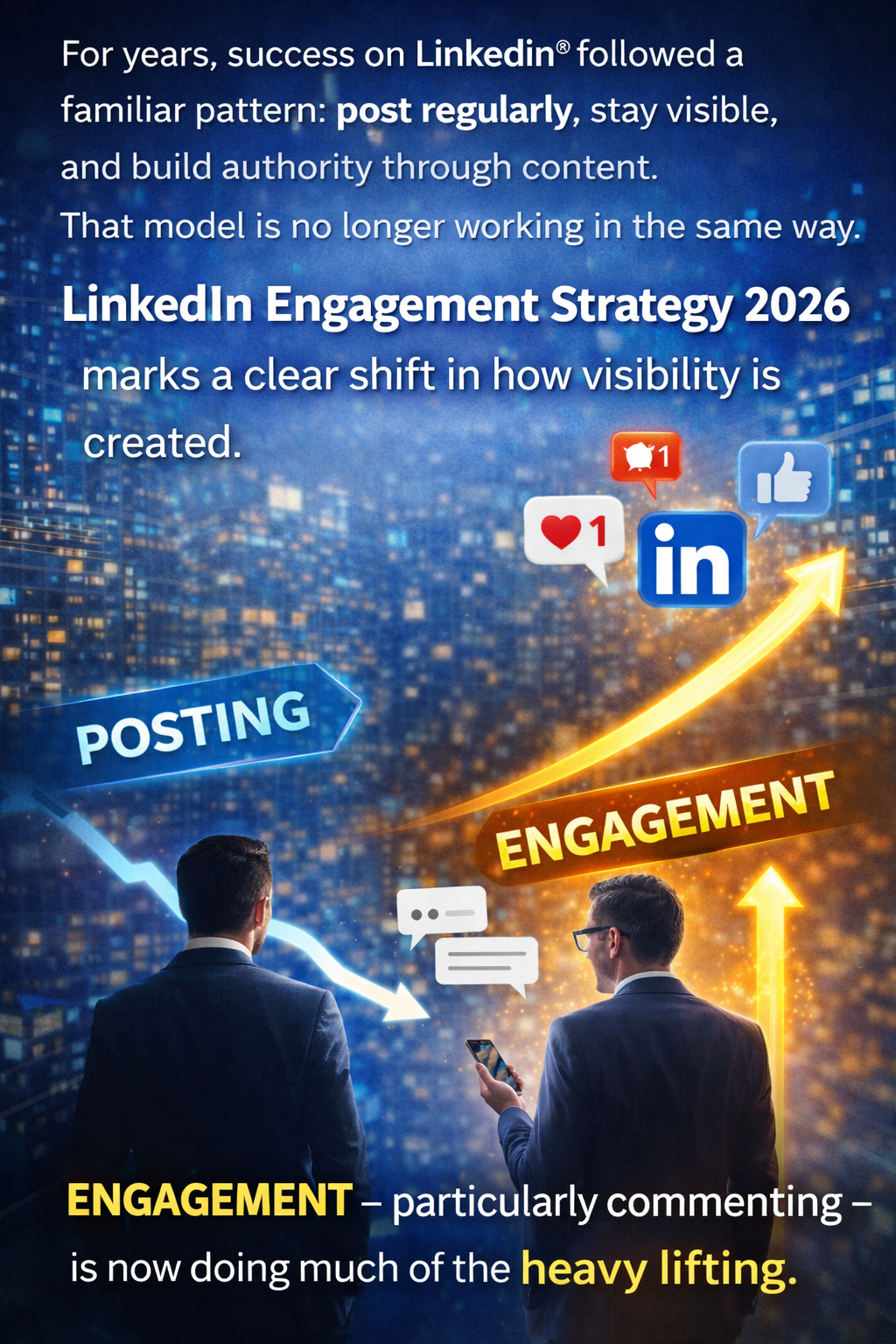
For years, success on LinkedIn® followed a familiar pattern:
post regularly, stay visible, and build authority through content.
That model is no longer working in the same way.
The LinkedIn engagement strategy 2026 marks a clear shift in how visibility is created. Posting still matters, but it is no longer the primary driver of reach, influence, or connection.
Instead, engagement – particularly commenting – is now doing much of the heavy lifting.
What’s changed on LinkedIn®
Many professionals have noticed the same pattern over the past 12–24 months:
- Post reach has declined
- Profile views have dropped
- Content is staying within existing networks
At the same time, something else has emerged.
Comments are being seen more widely, generating more interaction, and creating unexpected visibility.
This is not accidental. It reflects a broader change in how LinkedIn® distributes and prioritises content.
Why the LinkedIn engagement strategy 2026 is different
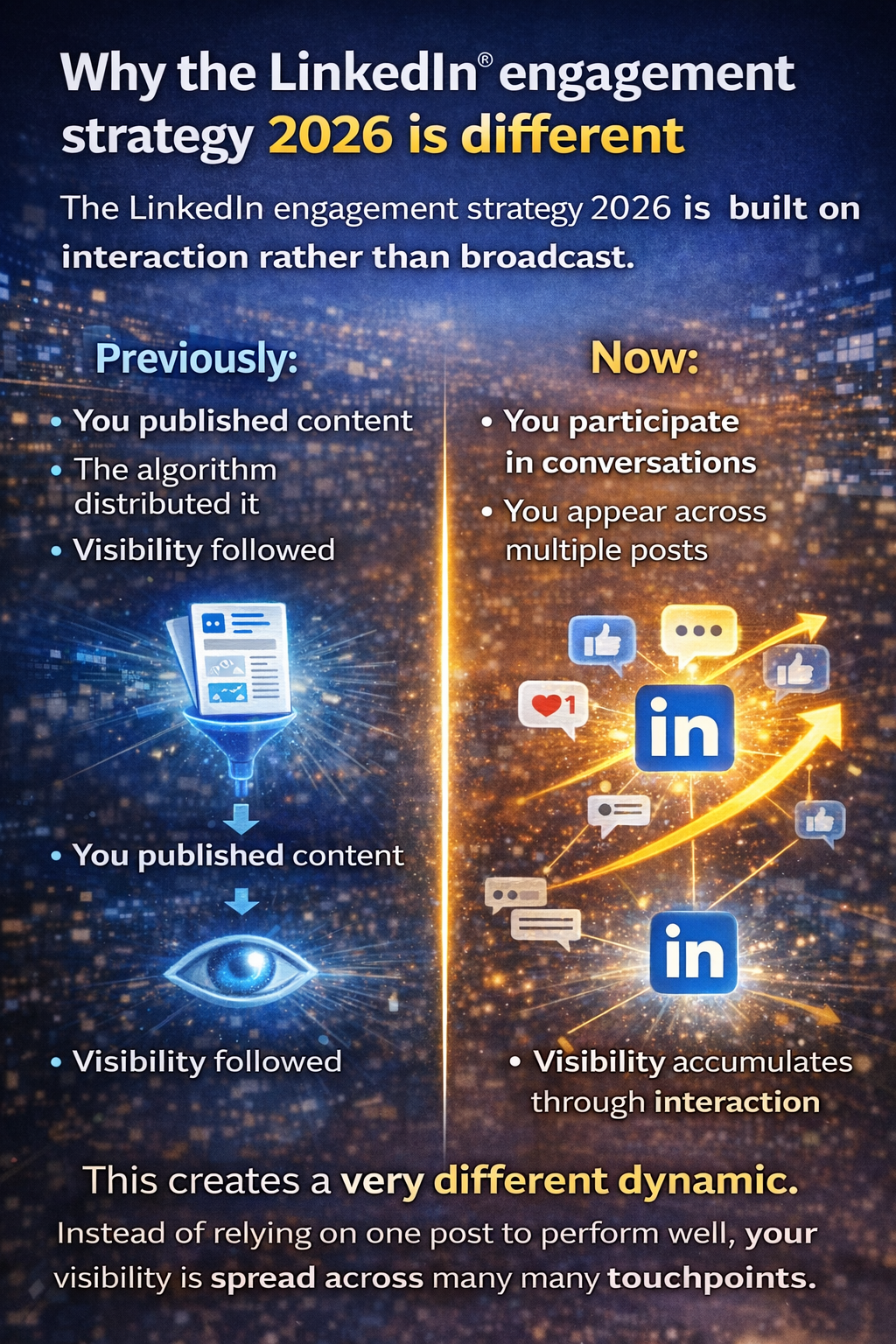
The LinkedIn engagement strategy 2026 is built on interaction rather than broadcast.
Previously:
- You published content
- The algorithm distributed it
- Visibility followed
Now:
- You participate in conversations
- You appear across multiple posts
- Visibility accumulates through interaction
This creates a very different dynamic.
Instead of relying on one post to perform well, your visibility is spread across many touchpoints.
How commenting now drives visibility
Commenting works because it places you directly inside active conversations.
Each comment:
- exposes you to a new audience
- reinforces your name and perspective
- shows how you think in context
Unlike posts, which are often consumed passively, comments are part of an ongoing exchange. That makes them more dynamic and, increasingly, more visible.
A useful way to understand this is:
🔷 Posts introduce you.
🔷 Comments build you.
How to comment effectively on LinkedIn®
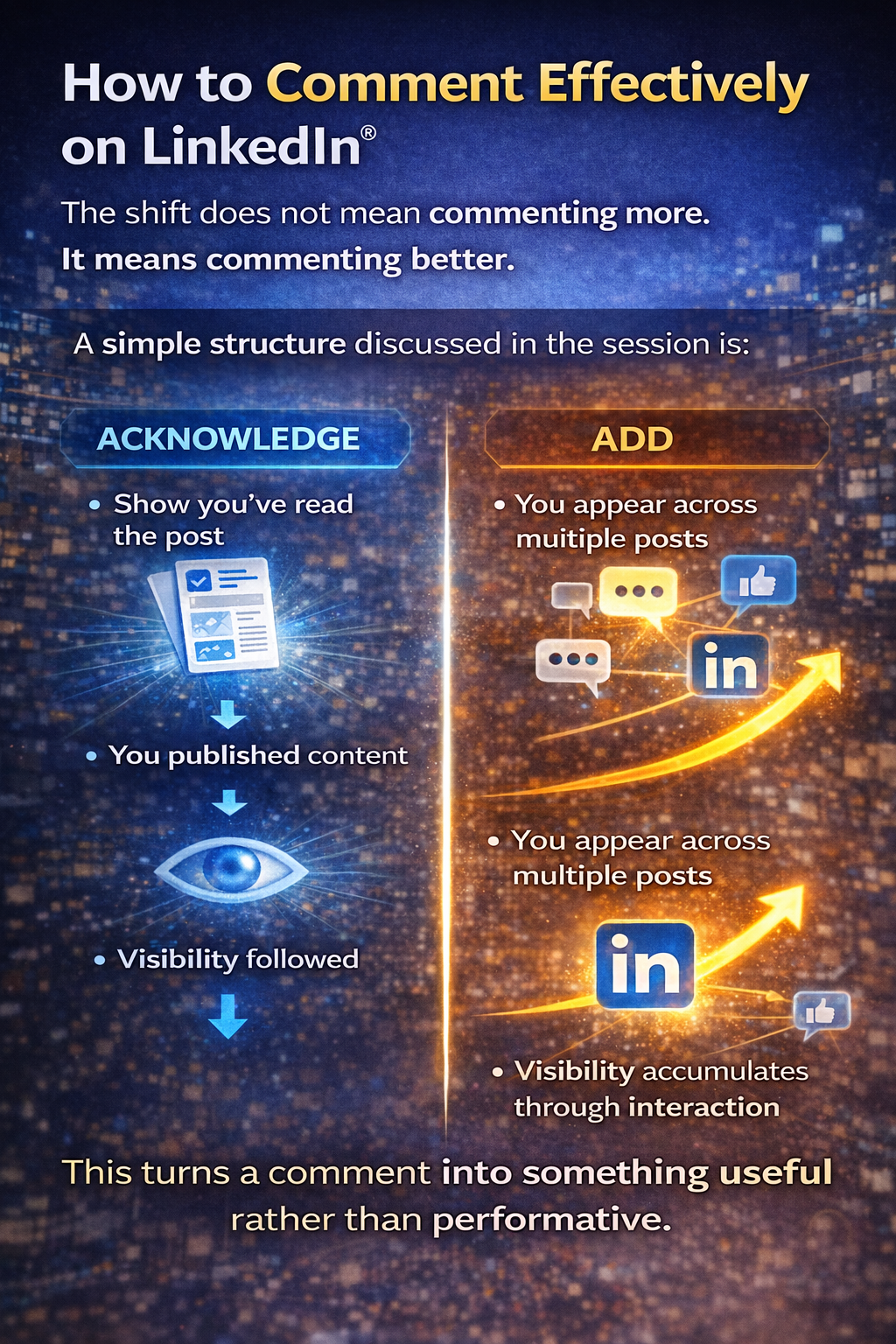
The shift does not mean commenting more. It means commenting better.
A simple structure discussed in the session is:
- Acknowledge – show you’ve read the post
- Add – contribute an insight or perspective
- Advance – move the conversation forward
This turns a comment into something useful rather than performative.
For example:
- referencing a specific idea from the post
- sharing a relevant experience
- asking a thoughtful question
These are the kinds of contributions that attract responses and visibility.
Common mistakes that reduce visibility
Despite the shift, many people are still using outdated behaviours.
These include:
- Writing generic comments such as “Great post”
- Posting and not responding to replies
- Adding irrelevant or self-promotional content
- Treating comments as secondary to posts
These behaviours limit both visibility and credibility.
The LinkedIn engagement strategy 2026 requires a more intentional approach.
Why this matters for AI discoverability
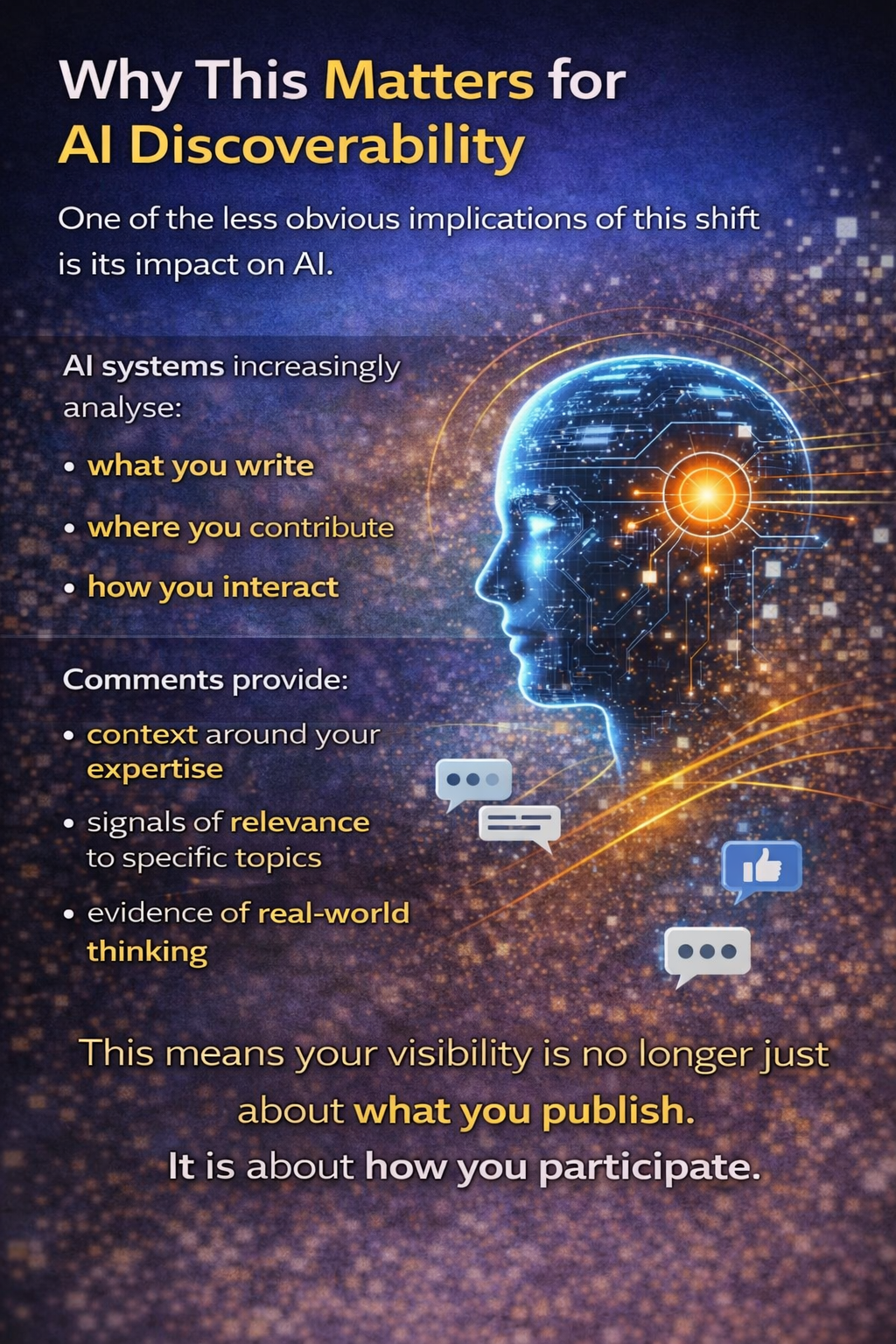
One of the less obvious implications of this shift is its impact on AI.
AI systems increasingly analyse:
- what you write
- where you contribute
- how you interact
Comments provide:
- context around your expertise
- signals of relevance to specific topics
- evidence of real-world thinking
This means your visibility is no longer just about what you publish. It is about how you participate.
Strategic implications for professionals
The LinkedIn engagement strategy 2026 changes how you should approach the platform.
It suggests:
- prioritising conversations over content volume
- focusing on relationships rather than reach
- using comments to demonstrate thinking
- building consistency through interaction
This lowers the barrier to entry while increasing the quality of visibility.
A simple way to get started
A practical starting point shared in the session:
- Identify 10 relevant people
- Comment on 2 posts per day
- Start 1 meaningful conversation per week
This is not a limit. It is a foundation.
Over time, this builds familiarity, trust, and opportunity.
Final thought
The LinkedIn engagement strategy 2026 is not a small adjustment.
It is a structural shift in how visibility works.
Those who continue to rely only on posting may find themselves increasingly invisible.
Those who learn to engage effectively will be seen, recognised, and remembered.