
Executive Visibility: Why Leadership Reputation Now Forms Before the First Conversation
Senior leaders are increasingly evaluated before meetings occur. Executive visibility determines how expertise, judgement and leadership perspective are understood when others research a leader before the first conversation.
Executive Visibility in One Sentence
Executive visibility is the degree to which a leader’s expertise, judgement and perspective can be understood before direct interaction occurs.

Introduction
For most of modern business history, leadership reputation developed through direct interaction. Executives built credibility through performance, relationships and reputation within their professional networks. People formed judgements through meetings, conversations and shared experience over time.
That dynamic has changed.
Today, leaders are often evaluated before any conversation takes place. Profiles are reviewed, commentary is scanned and search results are interpreted. Potential partners, clients and collaborators frequently conduct their own research before deciding whether to engage.
Executive visibility therefore plays a far more significant role than many leaders realise. It shapes how others understand a leader’s expertise, judgement and perspective before any direct interaction occurs.
Importantly, executive visibility is not about self-promotion. It is about ensuring that the signals available to others accurately reflect the leadership capability behind the title.
Executive Visibility – Definition
Executive visibility is the degree to which a leader’s expertise, judgement and perspective can be understood before direct interaction occurs.
It reflects the signals people encounter when researching that leader – whether through professional profiles, commentary, interviews or published insights – and shapes how credibility and authority are perceived before conversations begin.
What Executive Visibility Actually Means
In practical terms, executive visibility refers to how clearly a leader’s expertise and thinking can be understood by others through publicly available signals.
When people research a senior leader today, they are often trying to understand several things:
- What expertise the leader is known for
- What problems they solve
- What perspective they bring to industry issues
- What judgement they apply to complex decisions
In other words, visibility is about clarity of signal, not volume of communication.
Example
Consider two senior executives with similar roles and experience. Both run large divisions and have strong reputations internally.
However, when someone researches the first executive online they see little more than a job title and company description. When they research the second, they find several short articles explaining industry shifts and a few thoughtful comments on major developments.
The difference is not expertise. The difference is visibility of thinking. The second executive’s judgement is easier to understand before the first meeting even occurs.
Why Reputation Formation Has Changed
Historically, reputation travelled through networks. Introductions and referrals carried the credibility of the person making the connection.
Digital discovery has changed this process.
Today it is common for people to research individuals before meetings, partnerships or speaking invitations. LinkedIn profiles, interviews and articles provide an initial layer of context that shapes expectations before conversations begin.
AI systems are also beginning to summarise professional expertise based on these signals.
Example
A conference organiser looking for speakers on digital transformation may search online for recognised leaders in the field.
Two executives may have equal expertise. However, the one who has previously shared insights on industry developments is easier to identify and evaluate.
In practice, this means visibility can influence opportunity long before introductions occur.

Why Senior Leaders Often Underestimate Visibility
Many experienced leaders built their careers in environments where reputation travelled primarily through performance and personal networks.
Because of this, online visibility can appear secondary to the “real work” of leadership.
However, the way opportunities arise has shifted. Journalists, conference organisers, potential partners and prospective clients now routinely conduct their own research before making contact.
Example
A journalist preparing a story on a major industry change needs expert commentary. They search for leaders who have previously written or spoken about the topic. Those signals help the journalist identify individuals who are likely to provide informed perspective.
Executives who have never publicly articulated their views may still possess deep expertise – but they are far harder to discover.
How Visibility Shapes Perception Before Meetings
Executive visibility changes the starting point of professional conversations.
When little context exists, early discussions often focus on basic orientation: understanding the leader’s role, priorities and experience.
When a leader’s thinking is already visible, conversations tend to begin at a more advanced level.
Example
A potential strategic partner researches a senior executive before a meeting. They discover a short article the executive wrote explaining how regulatory change will affect the sector over the next five years.
When the meeting begins, the partner already understands the executive’s perspective and priorities. Instead of asking introductory questions, the discussion moves directly to implications and opportunities.
Visibility therefore accelerates the depth of professional dialogue.
The Difference Between Posting and Signalling
A common misconception is that executive visibility requires constant posting or self-promotion.
In reality, visibility is primarily about signalling expertise and judgement.
A small number of thoughtful contributions can communicate far more about a leader’s perspective than frequent but generic content.
Example
One executive posts regularly about general leadership advice. Another publishes two short pieces each year explaining significant developments affecting their industry.
The second executive may post far less frequently, yet their signals about expertise are significantly stronger.
Visibility is therefore less about activity and more about relevance and clarity of insight.
From Concept to Framework
Because executive visibility develops through multiple signals over time, it can be difficult for leaders to assess where they stand.
Many assume that visibility simply means being more active online. In reality, it involves several interconnected factors that influence how expertise is discovered, interpreted and acted upon.
To make this easier to understand, we use a practical framework called the Link∙Ability Executive Visibility Blueprint.
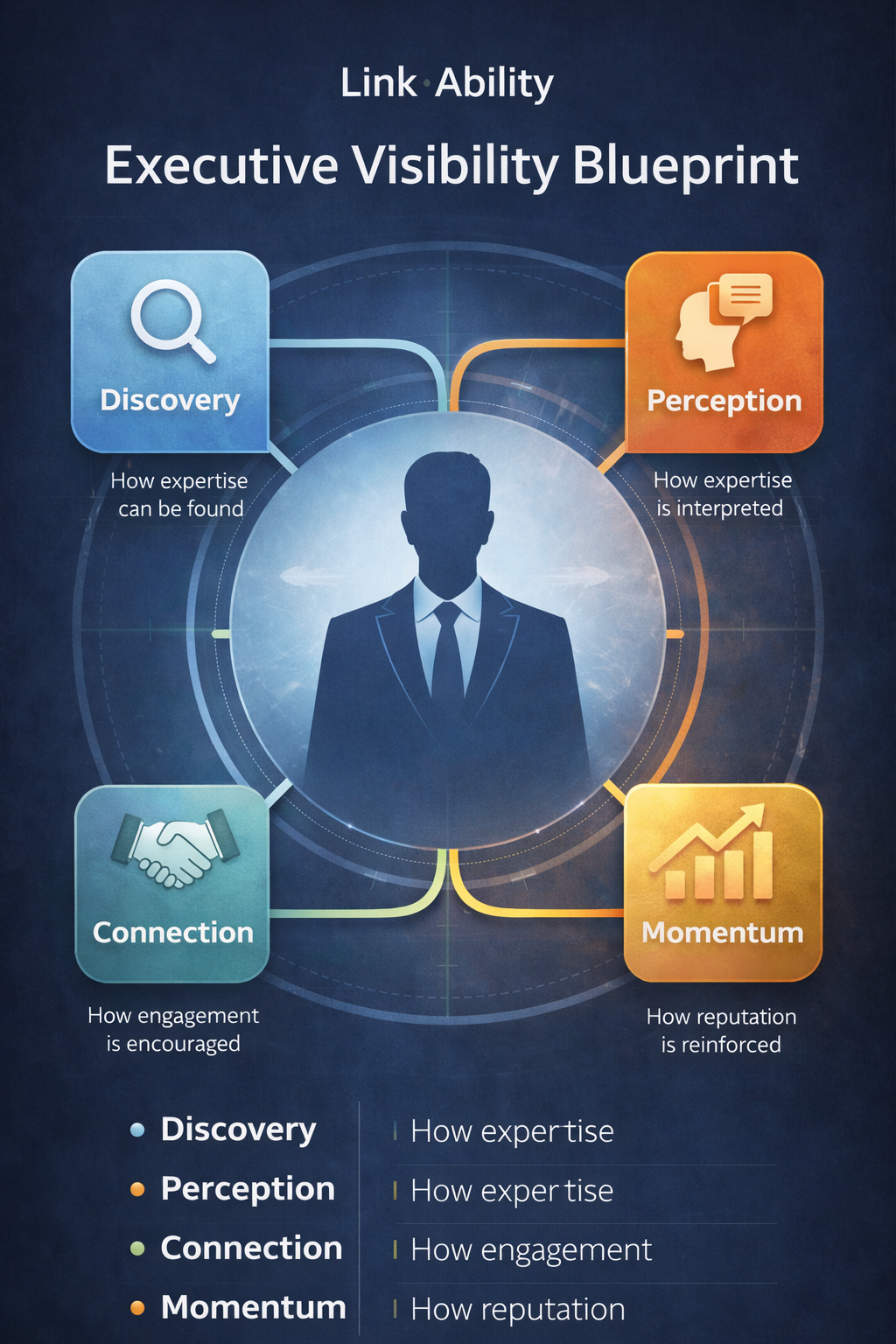
The Link∙Ability Executive Visibility Blueprint
Understanding executive visibility conceptually is useful. Applying it requires a practical framework.
At Link∙Ability, we use the Executive Visibility Blueprint to help leaders think about how their expertise becomes visible, understood and trusted before direct interaction occurs.
The Blueprint focuses on four elements that determine how leadership expertise becomes visible, interpreted and recognised.
Discovery
Discovery refers to how easily people can find credible information about a leader and their areas of expertise.
In many situations, the first interaction with a leader now occurs through research rather than conversation. When someone searches a name, reviews a professional profile or scans industry commentary, they are looking for signals that explain the leader’s role and influence.
Example
A potential partner searches for a senior executive before an introductory meeting. If the available information clearly reflects the areas the executive works in and the issues they influence, the meeting begins with context. If little information is available, the conversation must start from scratch.
Discovery ensures that a leader’s expertise can be found and understood by those seeking it.
Perception
Perception concerns the conclusions people draw once they encounter those signals.
Titles and organisational affiliations provide some context, but they rarely reveal how a leader thinks or what perspective they bring to their industry.
Signals that shape perception often include thoughtful commentary, interviews, articles or contributions to professional discussions.
Example
Two executives hold similar roles within their organisations. One has occasionally shared insights about major shifts affecting their sector. The other has not publicly articulated their perspective.
When people research both leaders, the first appears easier to understand as a credible voice on the topic.
Perception determines whether visibility translates into recognised expertise.
Connection
Connection refers to whether visibility encourages meaningful professional engagement.
When a leader’s thinking is clearly visible, people are better able to understand the value of interacting with them. This can lead to invitations to collaborate, speak, contribute expertise or explore partnerships.
Example
A conference organiser researching potential speakers finds a short article written by an executive explaining a complex industry development. The clarity of the executive’s perspective makes it easier to identify them as a suitable contributor.
Connection is the point where visibility begins to generate professional opportunity.
Momentum
Momentum describes how visibility compounds over time. Individual contributions may appear small in isolation, but together they gradually form a body of insight that reinforces a leader’s reputation.
Over time, this accumulated visibility makes it easier for others to recognise the leader’s expertise and authority.
Example
An executive publishes occasional commentary on developments affecting their sector over several years. When people later research the topic, those contributions collectively demonstrate a sustained and informed perspective.
Momentum ensures that executive visibility strengthens rather than fades over time.

Bringing the Blueprint Together
The four elements of the Executive Visibility Blueprint work together.
- Discovery ensures that expertise can be found.
- Perception shapes how that expertise is interpreted.
- Connection creates opportunities for engagement.
- Momentum reinforces reputation over time.
Together, they help ensure that a leader’s professional perspective is not only strong, but visible and understandable to those who need to recognise it.
Visibility in the AI Era
AI-assisted discovery is accelerating the importance of these signals.
Search engines and AI tools increasingly summarise people and organisations using available digital information. Leaders who contribute thoughtful insights provide richer signals that help those systems understand their expertise.
Without such signals, descriptions often default to basic information such as job title and company.
Example
An AI assistant asked to summarise an industry leader will draw from the available signals it can find.
If those signals include commentary, interviews or articles, the summary reflects their expertise. If the signals are limited, the description may simply restate their role.
For leaders whose influence depends on reputation and expertise, this distinction matters.
A useful principle emerges from this shift: leadership reputation increasingly forms before the first conversation takes place.
When people research a leader today, the signals they encounter influence expectations about expertise, credibility and perspective long before any direct interaction occurs.
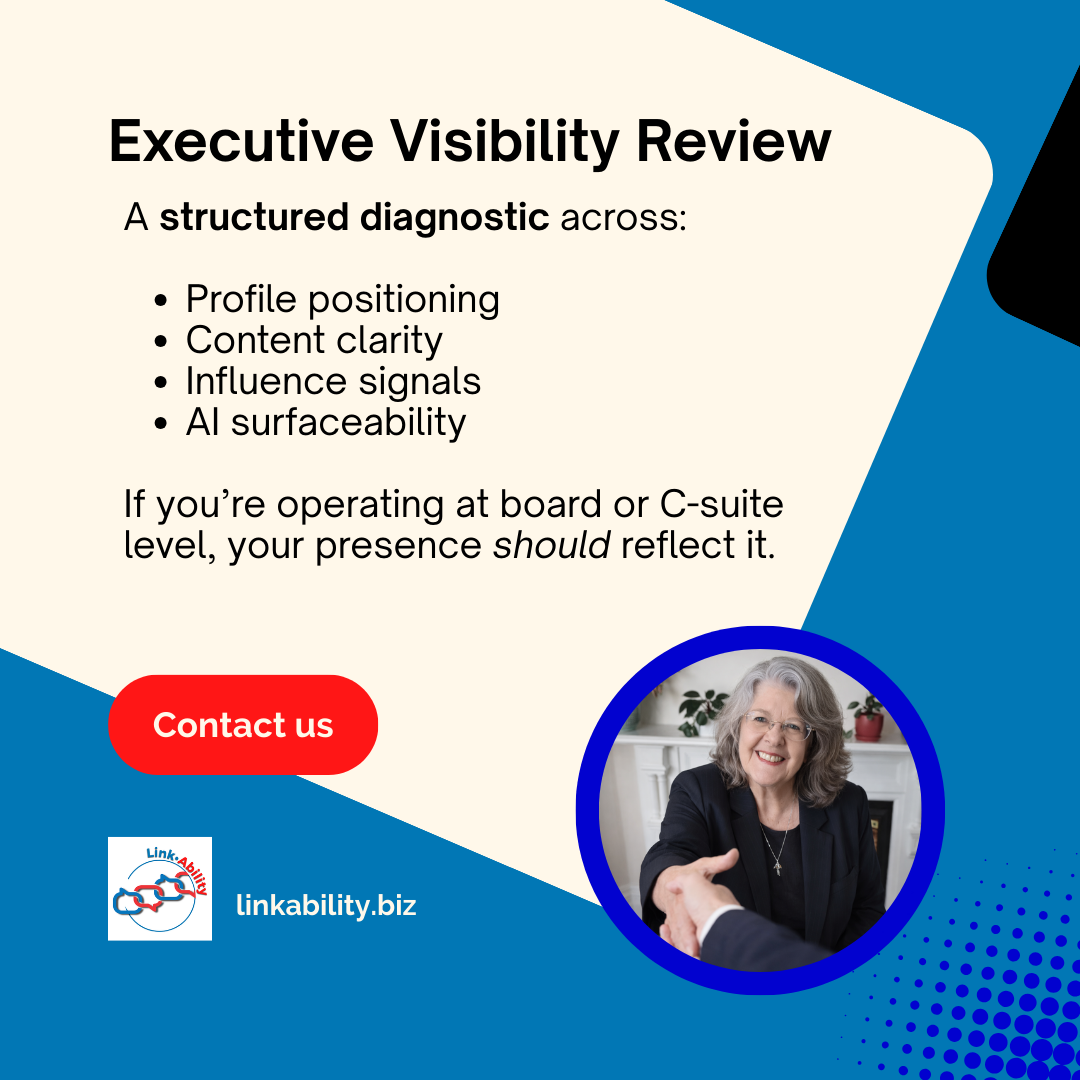
Executive Visibility Review
For many senior leaders, the challenge is not recognising that visibility matters, but understanding how their own expertise currently appears to others.
Because reputation now forms through a combination of search signals, commentary and professional context, it can be difficult to assess this objectively from inside an organisation.
This is why we developed the Link∙Ability Executive Visibility Review, which helps leaders understand how their expertise, perspective and influence are currently interpreted before conversations take place.
Conclusion
Professional influence rarely begins when a meeting starts. It begins earlier, when someone decides whether the meeting should happen at all.
Executive visibility ensures that when people seek context about a leader, the signals they encounter accurately reflect the expertise, judgement and perspective behind the role.
In an environment where reputation increasingly forms before the first conversation, visibility has become an essential component of modern leadership.